For nearly thirty years, web browsers have followed the same basic principle: users search for information, open multiple tabs, compare websites, and manually complete tasks.
That model is beginning to change.
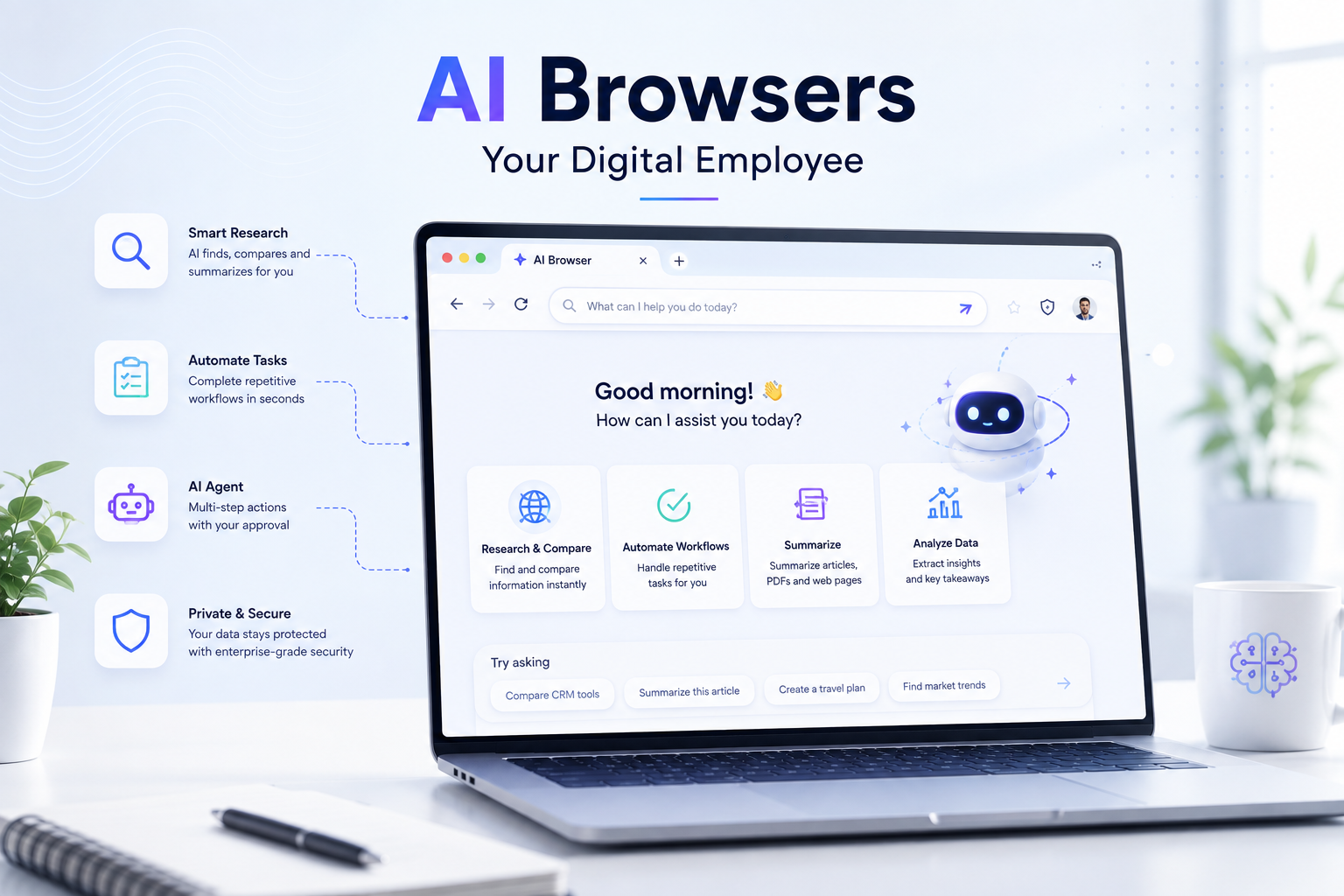
In 2026, a new generation of AI-powered browsers is emerging. Instead of simply displaying websites, these browsers understand user intent, perform actions, summarize information, automate repetitive workflows, and interact with online services.
The browser is evolving from a viewing tool into an intelligent digital assistant.
What Is an AI Browser?
An AI browser combines a traditional web browser with advanced artificial intelligence capable of understanding natural language and executing tasks.
Rather than opening five different websites to compare products, summarize research, or book appointments, users can simply describe what they need.
The browser handles the rest.
Examples include:
- Researching competitors
- Comparing software pricing
- Summarizing long articles
- Booking travel
- Filling online forms
- Organizing documents
- Creating reports
- Managing emails
Instead of browsing manually, users focus on outcomes.
A Shift From Searching to Doing
Traditional search required users to visit multiple websites before making decisions.
AI browsers reduce this entire process into a single interaction.
For example, instead of asking:
"Find the best project management software."
A user might say:
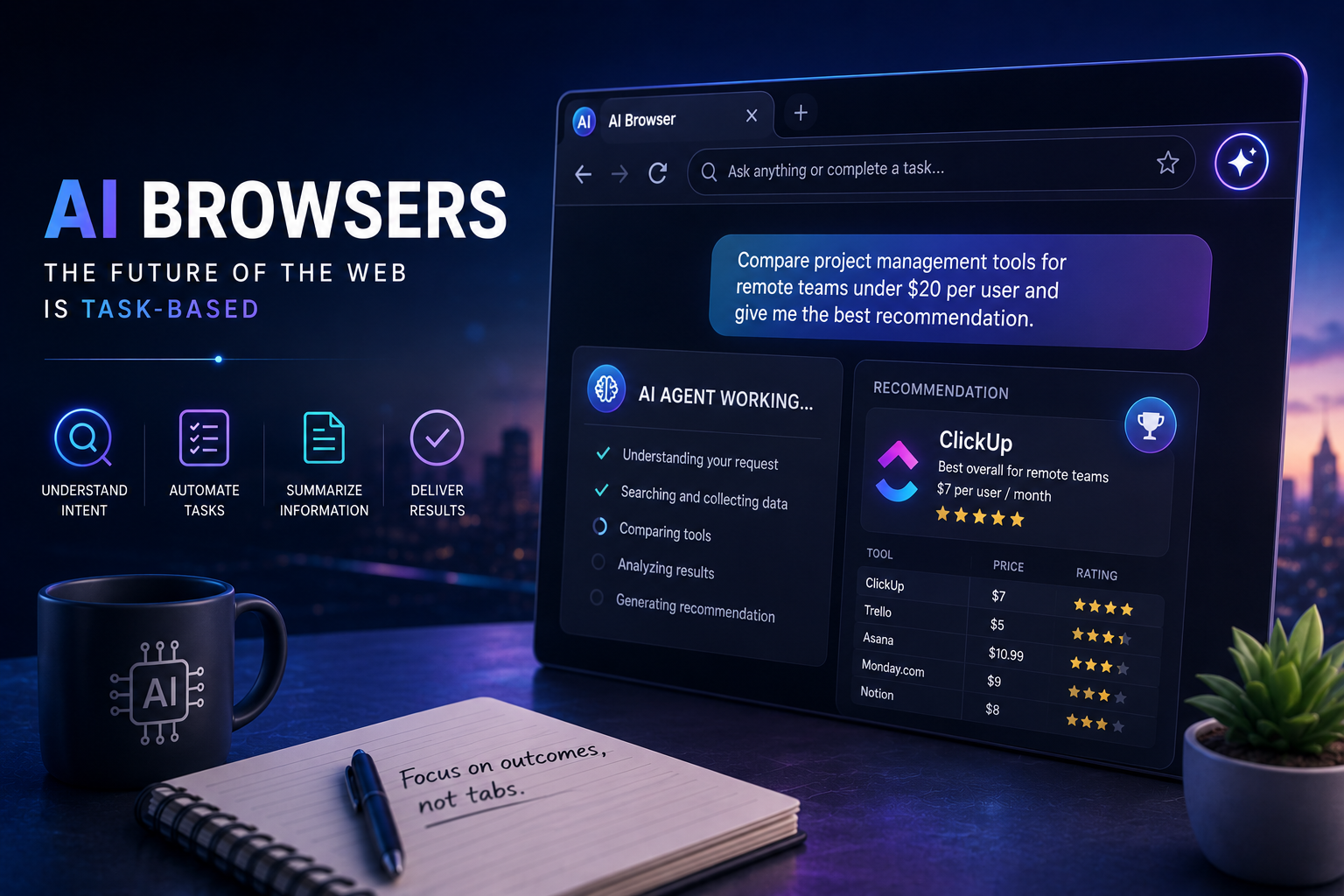
"Compare the top five project management tools for a remote software team under $20 per user, summarize their strengths, and prepare a recommendation."
The browser researches, analyzes, and delivers actionable results within minutes.
What This Means for Businesses
As AI browsers become mainstream, websites must evolve.
Businesses can no longer rely solely on attractive landing pages.
Their websites must provide:
- Structured content
- Clear product information
- Fast performance
- Accessible APIs
- Accurate metadata
- Semantic HTML
- Trustworthy documentation
AI systems need content they can understandânot just content that looks visually appealing.
New Opportunities for Developers
Developers will play a central role in this transition.
Modern applications should be designed for both humans and AI agents.
This includes:
- Machine-readable data
- Well-documented APIs
- Structured product catalogs
- Fast backend responses
- Secure authentication
- Intelligent automation hooks
- AI-friendly navigation
Applications built with these principles will integrate more effectively with AI-driven workflows.
Productivity Without Tab Overload
One of the biggest advantages of AI browsers is reducing digital clutter.
Many professionals currently work with 20â50 browser tabs open at once.
AI assistants can consolidate information, summarize findings, and automate repetitive online tasks without requiring users to switch endlessly between websites.
This creates a cleaner and more productive workflow.
Challenges Ahead
Despite their advantages, AI browsers introduce new considerations.
Businesses must address:
- User privacy
- Data permissions
- AI reliability
- Security
- Website compatibility
- Transparency
- Responsible automation
Organizations adopting AI browsing experiences should ensure users remain in control of important decisions.
The Future of the Web
The internet is gradually shifting from information retrieval to intelligent task execution.
Tomorrow's websites won't simply compete for clicksâthey'll compete to become trusted data sources for AI assistants.
Businesses that invest in structured content, high-performance web architecture, and intelligent automation today will be better positioned for the next generation of digital experiences.
Final Thoughts
AI browsers represent one of the most significant changes to the web since the introduction of search engines.
As artificial intelligence becomes deeply integrated into everyday browsing, developers and businesses must rethink how websites are designed, how information is delivered, and how users accomplish their goals.
The future of browsing isn't about opening more tabs it's about completing more meaningful work with less effort.
Share this article
Copy the article link and send it to anyone who may find it useful.