For decades, web browsers have served one primary purpose: helping people access websites.
Whether you were shopping online, researching a topic, managing business software, or developing applications, the browser simply displayed information while users manually completed every task.
That era is rapidly changing.
The latest generation of AI-powered browsers is transforming browsers into intelligent assistants capable of understanding context, comparing information, completing repetitive workflows, and helping users make decisions faster. Major browser vendors are introducing AI-driven browsing experiences, multi-tab reasoning, and agentic capabilities that allow browsers to perform increasingly complex tasks with user oversight.
This is becoming one of the most important trends in modern productivity.
Browsers Are Evolving Beyond Search
Traditional browsing required users to:
- Open multiple tabs
- Compare websites manually
- Copy information between pages
- Fill repetitive forms
- Switch between applications
Modern AI browsers aim to remove much of this manual work.
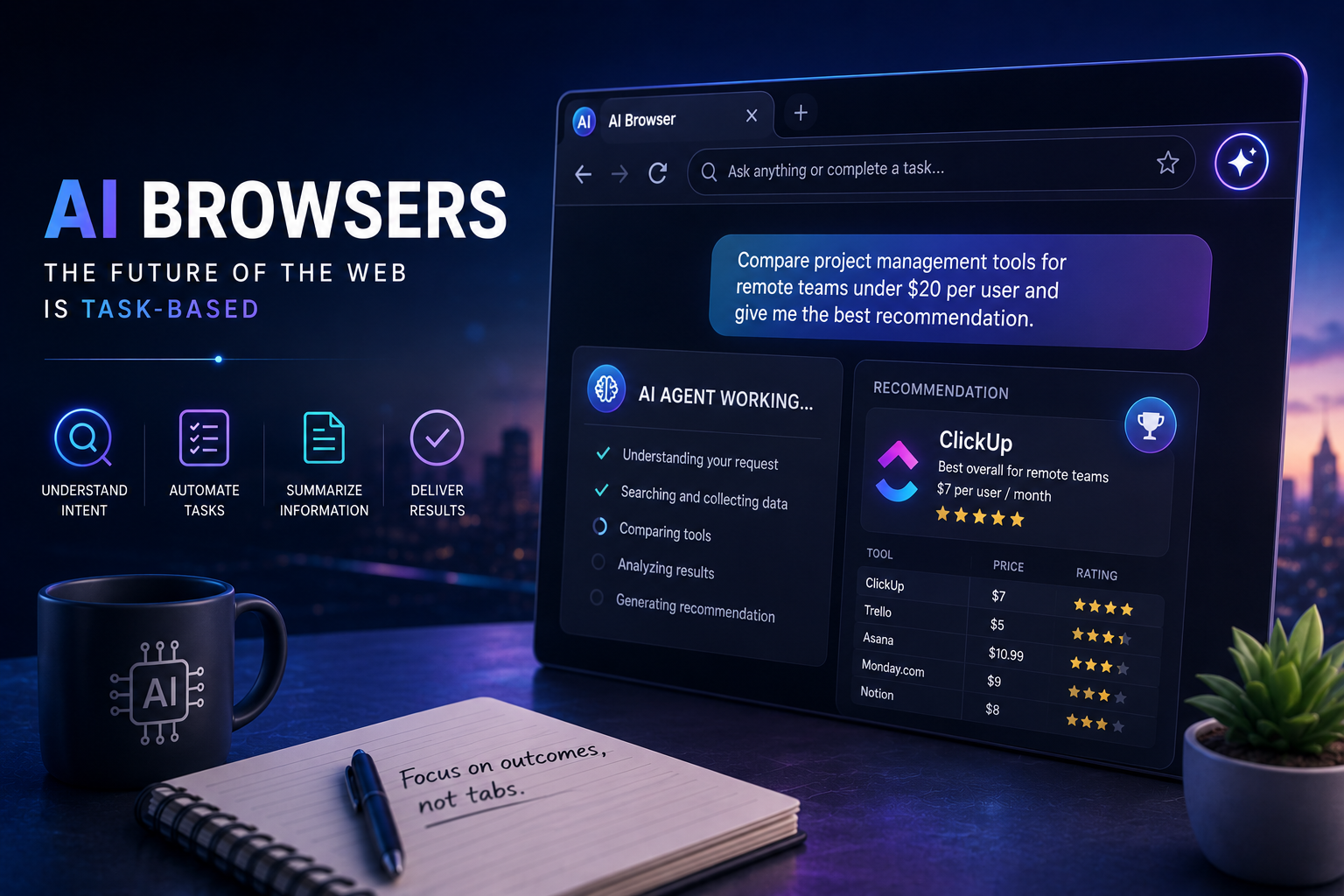
Instead of visiting ten websites yourself, you can simply ask:
"Compare the best project management tools for a software startup under $25 per user and summarize the advantages of each."
The browser researches the web, analyzes multiple sources, organizes findings, and presents actionable recommendations.
The focus is shifting from finding information to completing work.
Agentic Browsing Is the Next Big Step
One of the biggest developments this year is the introduction of agentic browsing.
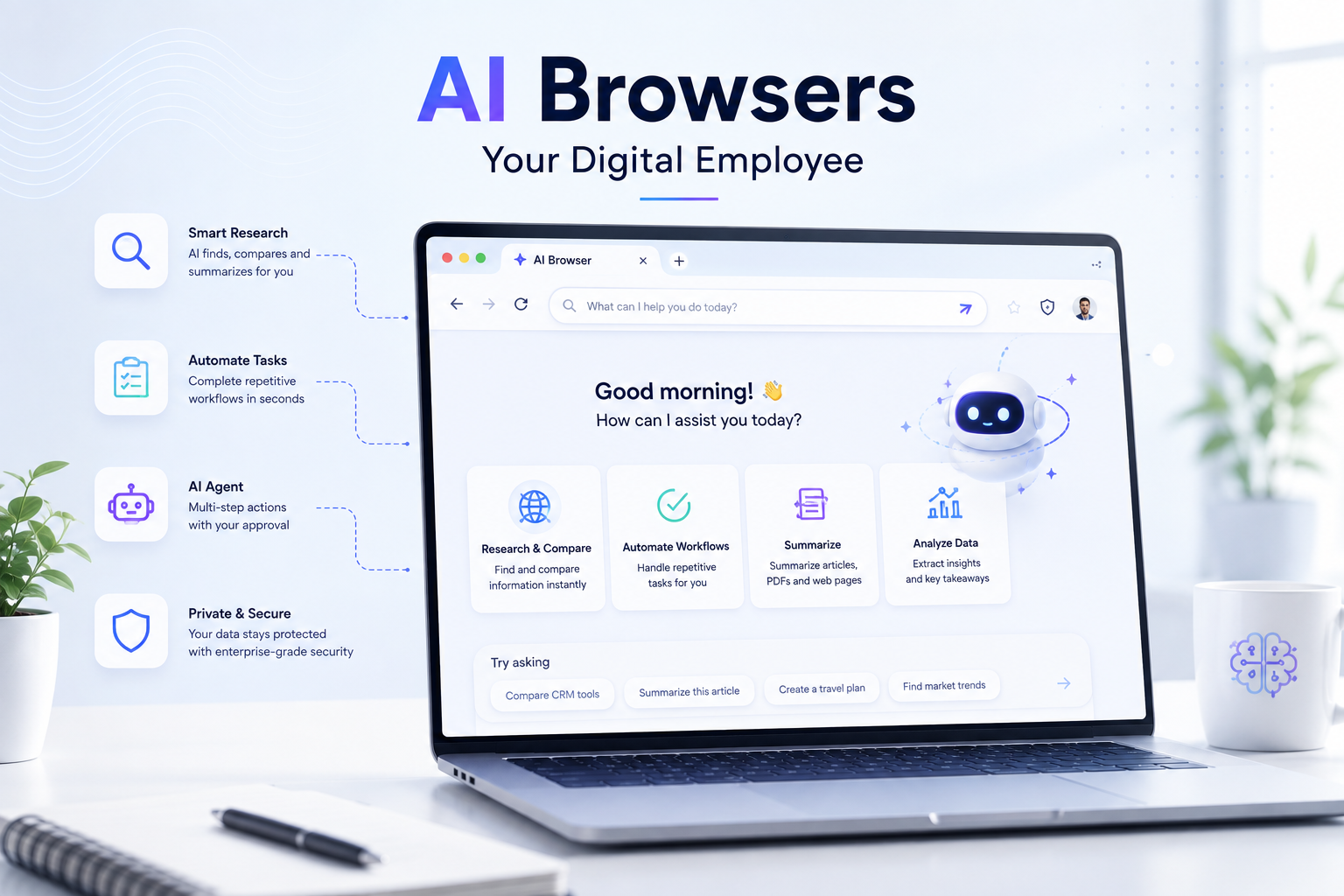
Rather than simply answering questions, AI can perform multi-step actions such as:
- Completing online forms
- Comparing pricing across websites
- Organizing travel plans
- Summarizing lengthy documentation
- Researching competitors
- Managing browser workflows
Importantly, these capabilities are designed with user approval and enterprise controls, allowing automation without removing human oversight.
Why Businesses Should Care
Businesses spend thousands of hours every year on repetitive browser-based work.
AI browsers can significantly reduce time spent on:
- Market research
- Competitive analysis
- Administrative tasks
- Documentation review
- Customer support research
- Data collection
- Internal reporting
Instead of hiring additional staff for repetitive digital work, organizations can automate many of these processes while allowing employees to focus on strategic decisions.
What This Means for Developers
Developers should prepare for a future where AI interacts directly with websites.
Modern web applications should provide:
- Structured semantic HTML
- Clean APIs
- Fast loading performance
- Machine-readable content
- Accessible interfaces
- Consistent navigation
- Strong authentication systems
Applications designed for both humans and AI agents will become increasingly valuable.
Security Is Becoming More Important
As browsers become more intelligent, security requirements also increase.
Organizations should implement:
- Multi-factor authentication
- Permission-based automation
- Secure API integrations
- Browser activity logging
- Data protection policies
- AI governance rules
Security must evolve alongside browser intelligence.
Faster Browser Innovation
Browser vendors are also accelerating their release schedules to deliver AI improvements more frequently. Faster update cycles mean users receive new capabilities and security enhancements sooner, while enterprise customers can still choose longer-term stable channels if needed.
Final Thoughts
The browser is quietly transforming from a passive viewing tool into an active digital coworker.
Instead of simply helping people access information, AI-powered browsers are beginning to complete meaningful work on behalf of users.
For businesses, developers, and entrepreneurs, this represents more than another AI featureâit marks the beginning of a new way of interacting with the web.
Organizations that design websites, applications, and digital services with AI-assisted browsing in mind will be better positioned for the next generation of online experiences.
Share this article
Copy the article link and send it to anyone who may find it useful.