Artificial Intelligence has traditionally relied on powerful cloud servers to process data and generate intelligent responses. Every requestâfrom voice assistants to image recognitionâwould travel across the internet before returning a result. While this approach works well, it also introduces latency, privacy concerns, and dependency on stable internet connections.
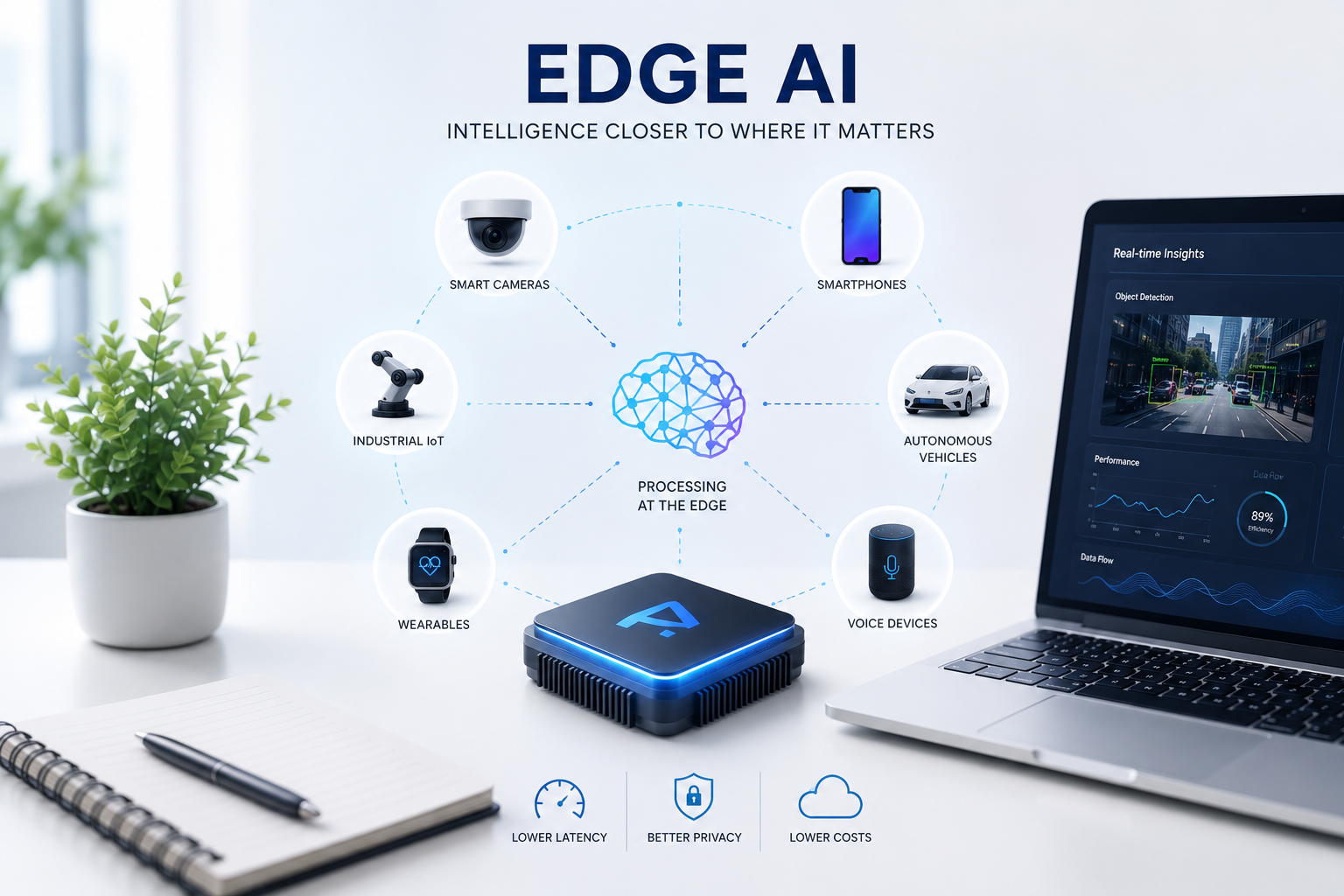
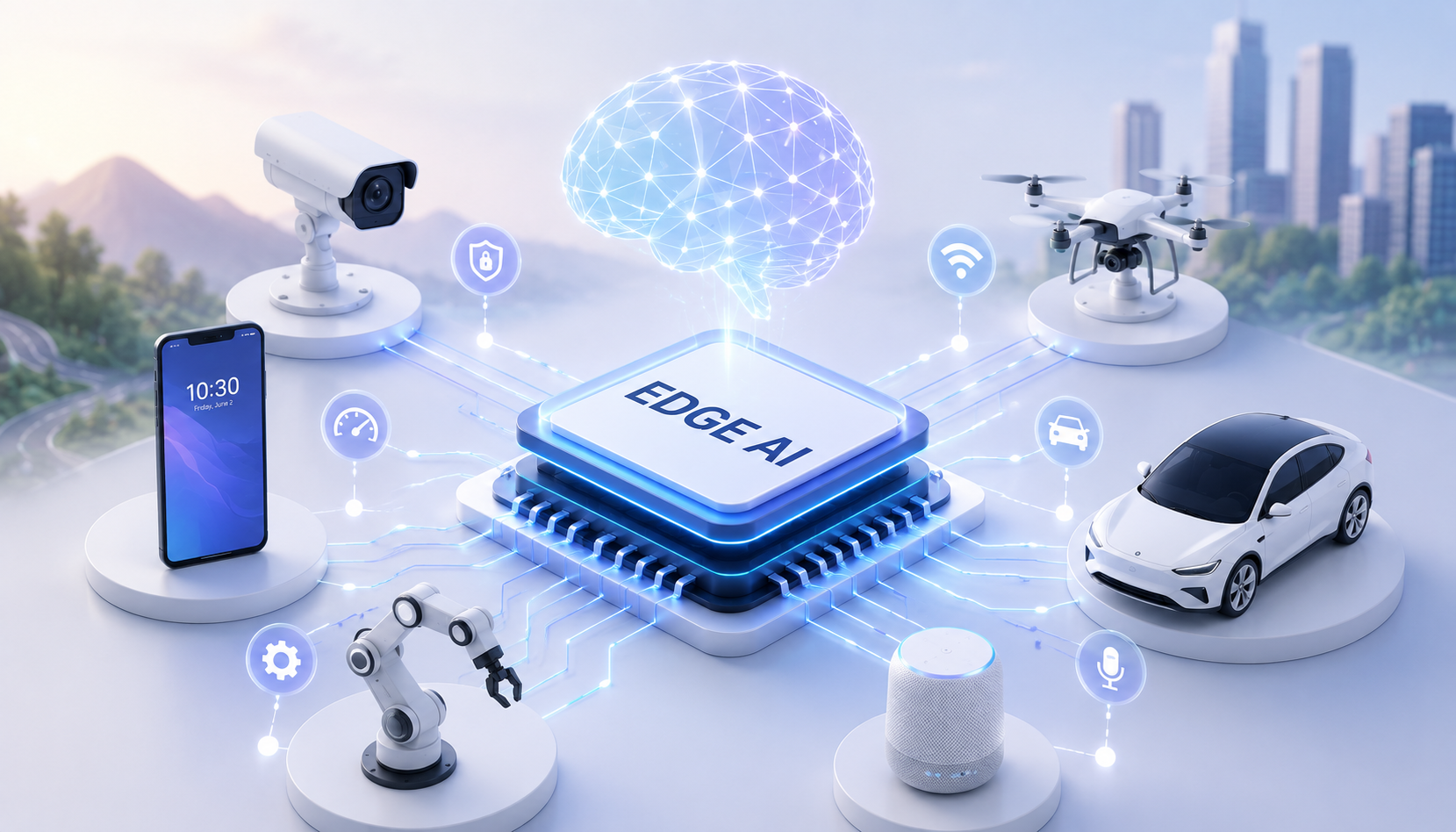
In 2026, a major shift is taking place. Businesses are increasingly adopting Edge AI, where machine learning models run directly on smartphones, laptops, cameras, IoT devices, and industrial equipment instead of relying entirely on the cloud.
This evolution is changing how developers design modern applications.
What Is Edge AI?
Edge AI refers to deploying artificial intelligence models directly on local devices rather than processing every request on remote servers.
Instead of sending sensitive data to the cloud, the device performs inference locally and only communicates with cloud services when necessary.
This creates faster, more reliable, and privacy-focused applications.
Why Businesses Are Investing in Edge AI
Organizations are embracing Edge AI because it solves several real-world challenges simultaneously.
Faster Response Times
Local processing eliminates network delays. Whether it's facial recognition, object detection, or predictive analytics, responses happen almost instantly.
This is critical for applications such as:
- Autonomous vehicles
- Smart security cameras
- Industrial automation
- Healthcare monitoring
- Robotics
- Smart manufacturing
Milliseconds can make a significant difference.
Better User Privacy
Privacy regulations continue to become stricter around the world.
By processing sensitive information directly on the device, businesses reduce the amount of personal data transmitted over the internet.
Users gain greater confidence knowing their information stays on their own devices whenever possible.
Reduced Cloud Costs
Every API request, storage operation, and computation performed in the cloud increases operational expenses.
Edge AI minimizes unnecessary cloud traffic by processing only essential information locally.
This helps businesses lower infrastructure costs while maintaining high performance.
Offline Intelligence
One of the greatest advantages of Edge AI is that applications continue functioning even when internet connectivity is unavailable.
Examples include:
- Translation apps
- Navigation systems
- Smart retail devices
- Mobile productivity tools
- Medical equipment
- Warehouse scanners
Users receive uninterrupted experiences regardless of network availability.
Challenges Developers Must Consider
Building Edge AI applications requires balancing several technical constraints.
Developers must optimize:
- Model size
- Memory usage
- Battery consumption
- CPU and GPU performance
- Device compatibility
- Security
- Update mechanisms
Frameworks such as TensorFlow Lite, ONNX Runtime, Core ML, and MediaPipe continue making on-device AI deployment more accessible.
The Future of Intelligent Applications
Future applications will increasingly combine cloud intelligence with local decision-making.
Large AI models will remain in powerful cloud environments, while lightweight models will run directly on devices for real-time tasks.
This hybrid architecture offers the best balance of speed, scalability, privacy, and cost.
Final Thoughts
Edge AI is no longer an experimental technologyâit is becoming a competitive advantage.
Companies that embrace on-device intelligence can deliver faster experiences, stronger privacy protections, lower infrastructure costs, and greater reliability.
As AI hardware continues to improve, the next generation of digital products will become smarter, more responsive, and less dependent on constant cloud connectivity.
For developers, learning how to build applications that combine cloud computing with Edge AI will be one of the most valuable skills of the coming years.
Share this article
Copy the article link and send it to anyone who may find it useful.