Artificial Intelligence has evolved far beyond cloud-based chatbots and recommendation engines. In 2026, one of the biggest technology trends is Edge AIâthe practice of running AI models directly on devices or near the data source instead of relying entirely on cloud servers.
For developers, startups, and businesses, Edge AI opens the door to faster, more secure, and highly responsive web applications that deliver a noticeably better user experience.
What Is Edge AI?
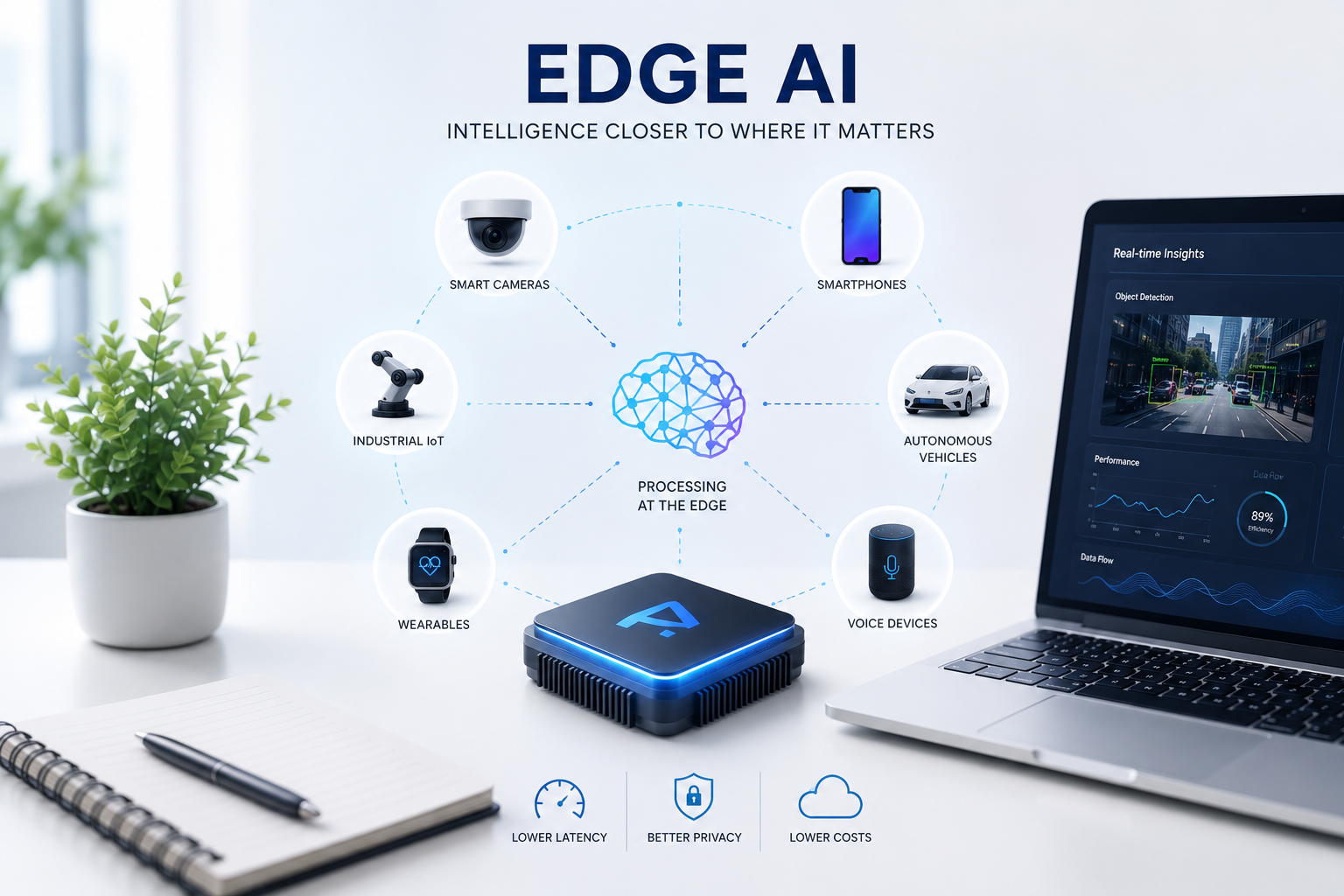
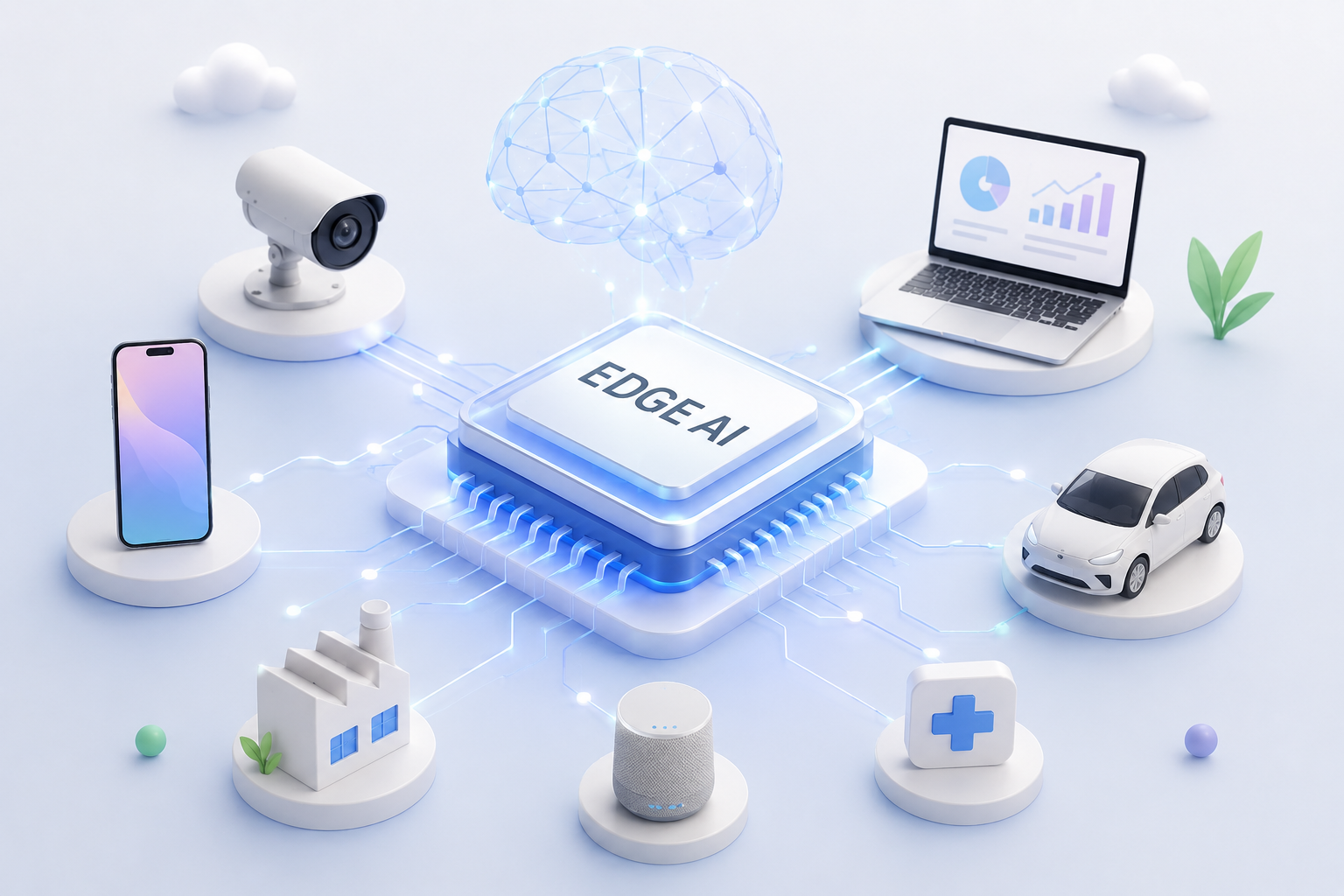
Edge AI refers to executing machine learning models on local devices such as smartphones, laptops, IoT devices, cameras, or nearby edge servers. Instead of sending every request to a remote cloud server, data is processed much closer to where it is generated.
This reduces latency, improves reliability, and helps protect sensitive user information.
Why Businesses Are Moving Toward Edge AI
Modern users expect applications to respond instantly. Every additional second of delay can reduce engagement and increase bounce rates.
By processing AI tasks locally, businesses can:
- Deliver near real-time responses.
- Minimize internet dependency.
- Improve application performance.
- Reduce cloud infrastructure costs.
- Enhance privacy by keeping sensitive data on-device.
These advantages make Edge AI especially valuable for customer-facing platforms where speed directly impacts user satisfaction.
Real-World Applications
Edge AI is already being integrated into a wide variety of digital products, including:
- Smart security and surveillance systems.
- AI-powered document scanning.
- Voice assistants.
- Healthcare monitoring applications.
- Retail checkout automation.
- Manufacturing quality control.
- Predictive maintenance dashboards.
- Mobile productivity applications.
As AI models become smaller and more efficient, even standard business websites can leverage Edge AI for intelligent features without sacrificing performance.
Benefits for Web Developers
Modern frameworks now make it easier than ever to integrate lightweight AI models into applications.
Developers can build systems that:
- Detect images instantly.
- Analyze user behavior locally.
- Personalize interfaces in real time.
- Translate languages offline.
- Generate smart form suggestions.
- Improve accessibility features.
These capabilities allow businesses to create premium digital experiences without overwhelming backend infrastructure.
Security and Privacy Advantages
Privacy regulations continue to evolve worldwide. Processing sensitive information directly on the user's device reduces the amount of personal data transmitted across networks.
This approach lowers security risks while helping organizations meet compliance requirements more effectively.
For industries such as healthcare, finance, and education, Edge AI provides an excellent balance between intelligence and privacy.
The Future of Edge AI
Hardware manufacturers continue to release devices with dedicated AI processors, making local inference faster than ever before.
Over the next few years, developers can expect:
- More powerful browser-based AI.
- Smarter Progressive Web Apps (PWAs).
- Offline AI capabilities.
- Faster real-time automation.
- Lower cloud operating costs.
- Better user experiences across every device.
Businesses that adopt Edge AI early will be better positioned to build scalable, intelligent, and future-ready digital products.
Final Thoughts
Edge AI is no longer an experimental technologyâit's becoming a core part of modern software development. By combining speed, privacy, efficiency, and intelligent automation, Edge AI empowers developers to create applications that feel faster, smarter, and more responsive than traditional cloud-only solutions.
As digital experiences continue to evolve, integrating Edge AI into web applications will become a competitive advantage for businesses aiming to deliver premium user experiences.
Share this article
Copy the article link and send it to anyone who may find it useful.